Visuals
The proposed City Center
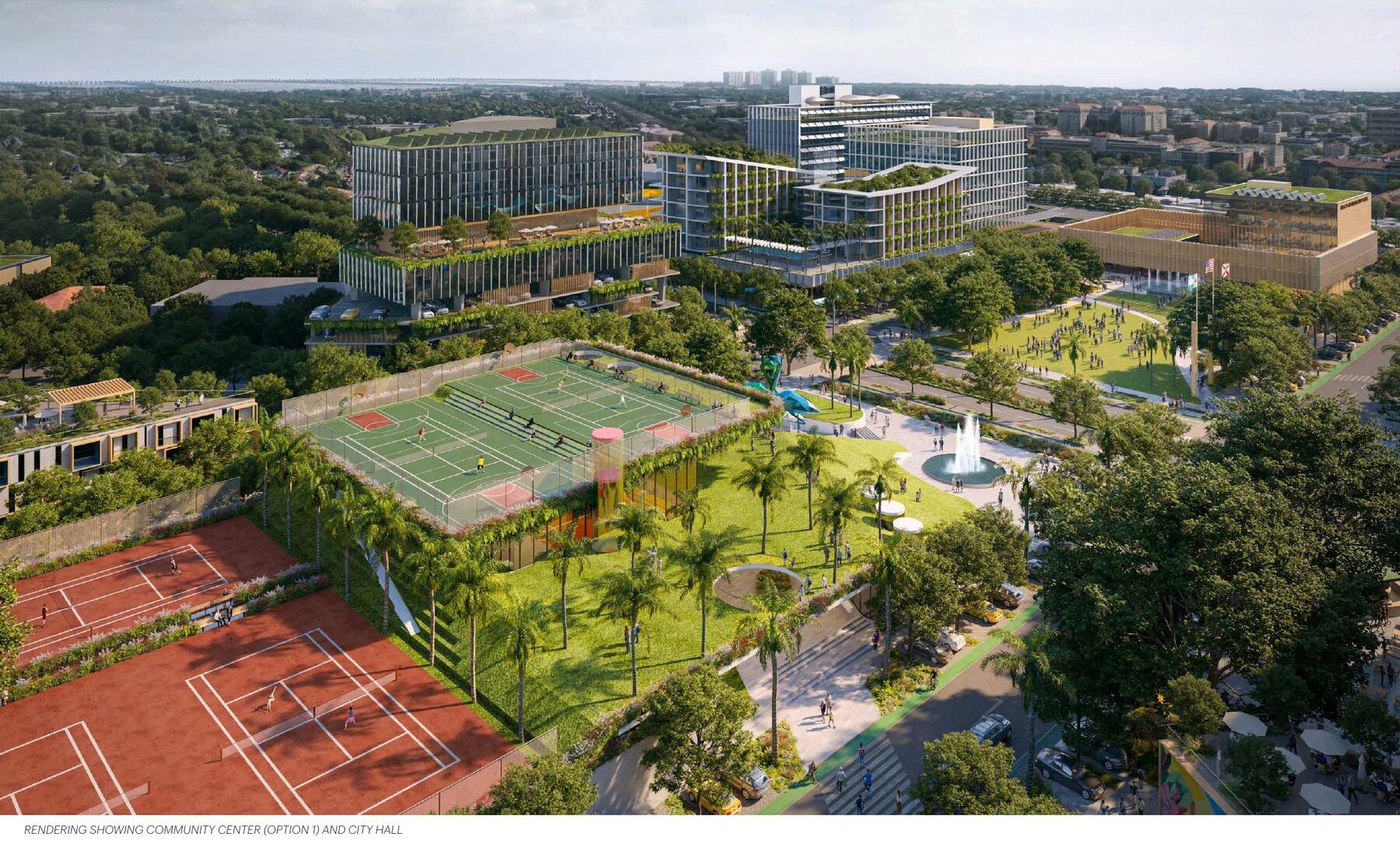
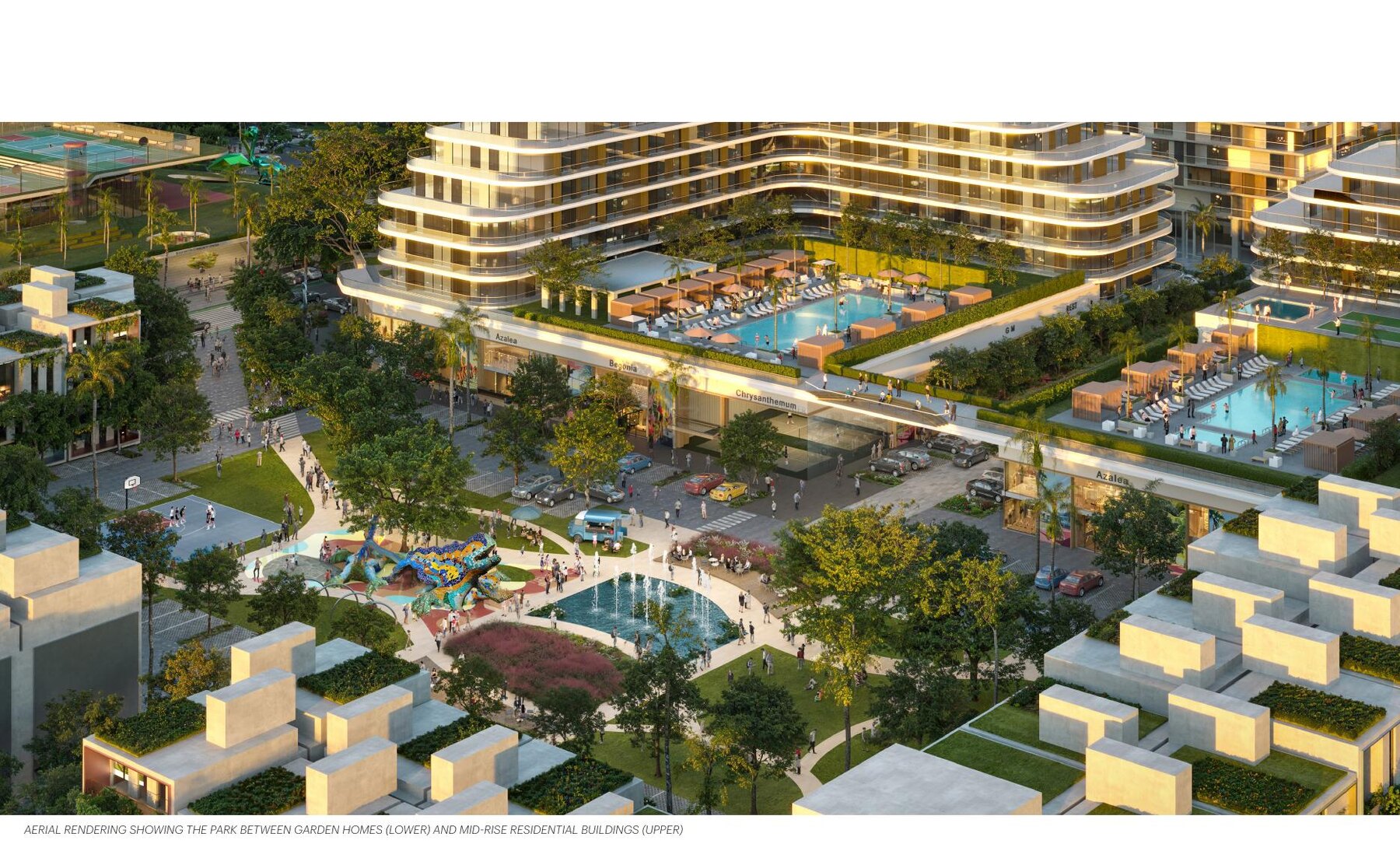
An independent economic and fiscal benefits assessment of the proposed public-private redevelopment of Boca Raton's downtown government campus — a plan that advanced to a public referendum in 2025, where voters rejected it.
BusinessFlare® was engaged by Terra to prepare an independent Economic and Fiscal Benefits Assessment for the proposed Boca Raton City Center — a public-private redevelopment of the city-owned downtown government campus. The June 2025 report translated the publicly-submitted master plan into rigorous estimates of jobs, economic output, wages, tax revenue, and community benefits for the City of Boca Raton, Palm Beach County, and the wider region.
The proposed program spanned roughly 30 acres and more than 1.3 million square feet of residential, office, retail, hotel, and civic space — including a new City Hall and Community Center delivered by the developer, plus 8 to 9 acres of parks, plazas, and public space. The plan proceeded to a public referendum in 2025, where it was defeated by voters.
BusinessFlare® found that redeveloping the tax-exempt city-owned site into high-value taxable property could generate roughly $18-20 million a year in property taxes at full buildout, support about 5,000 jobs and $1.64 billion in economic output during construction, and sustain roughly 3,050 permanent on-site jobs with over $520 million in annual economic output once operational — alongside new civic buildings and public open space. The plan was placed before voters in a 2025 referendum and was not approved.
How BusinessFlare® quantified the redevelopment program, its economic and fiscal impact, and the public process that followed.
The publicly-submitted master plan organized more than 1.3 million square feet of commercial, residential, and civic space around public greens, retail streets, neighborhood plazas, and landscaped parks — anchored by a new City Hall and Community Center and located near the Brightline rail station.
The assessment separated one-time construction impacts from recurring annual operations. Construction was projected to span roughly 8-10 years in phases, generating a substantial regional stimulus before the project's ongoing operations took over as a permanent economic engine.
Because the site was city-owned and tax-exempt, redevelopment would create an entirely new taxable base. With the site inside the downtown Community Redevelopment Area, most of the City and County increment would flow to the CRA trust fund until 2042, funding downtown improvements, before reverting to the City's general fund.
Beyond tax revenue, the plan emphasized public benefit: extensive open space, new civic facilities delivered by the developer in lieu of an upfront cash payment, and connectivity improvements integrating civic and private uses into a walkable downtown district.
As a redevelopment of city-owned land, the proposal required voter approval and was placed on the ballot. In the 2025 referendum, Boca Raton voters did not approve the plan, and the proposed redevelopment did not move forward. BusinessFlare®'s role was limited to the independent economic and fiscal analysis presented during the public process.